
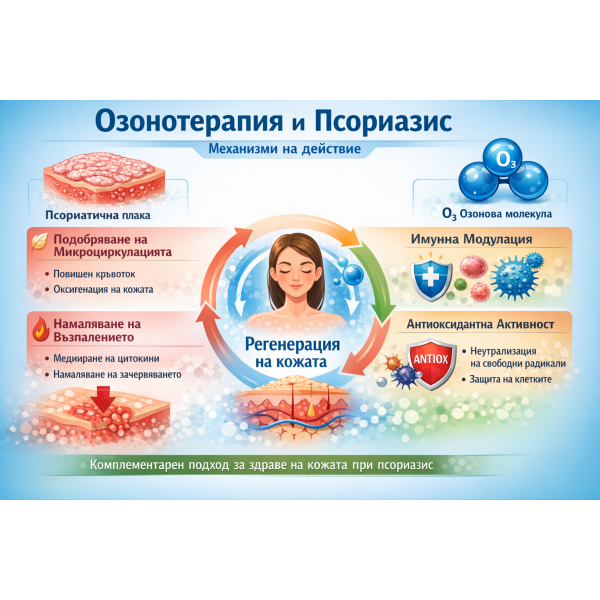
Ozone Therapy for Psoriasis – Mechanisms of Action and Potential Benefits
What Is Psoriasis
Psoriasis is a chronic inflammatory autoimmune skin disease characterized by accelerated proliferation of keratinocytes and dysregulation of the immune system.
The disease leads to the formation of characteristic skin plaques that are usually:
-
red
-
covered with silvery-white scales
-
accompanied by itching or discomfort
Psoriasis can affect different parts of the body, including:
-
the scalp
-
elbows
-
knees
-
lower back
-
nails
The condition is believed to result from a combination of genetic factors, immune system dysregulation and environmental triggers.
The Role of Inflammation and Oxidative Stress
Psoriasis is associated with chronic inflammation and increased oxidative stress.
Research suggests that patients with psoriasis may show:
-
increased levels of inflammatory cytokines
-
impaired antioxidant defense
-
elevated production of free radicals
These processes may contribute to:
-
damage to skin cells
-
accelerated keratinocyte proliferation
-
persistence of inflammatory responses
What Is Ozone Therapy
Ozone therapy is a therapeutic method that uses a mixture of oxygen and ozone (O₂–O₃) in controlled medical concentrations.
Ozone is an active form of oxygen that can trigger various biological responses in the body.
In medicine, ozone therapy is used to support:
-
microcirculation
-
tissue oxygenation
-
antioxidant defense
-
immune regulation
Mechanisms of Action of Ozone in Psoriasis
Improvement of Microcirculation
Microcirculation plays an important role in skin health.
Ozone may improve capillary blood flow and increase oxygen delivery to skin cells.
This may support:
-
cellular metabolism
-
tissue regeneration
-
skin recovery
Modulation of the Immune System
Psoriasis is an autoimmune condition characterized by excessive immune activity.
Ozone therapy may influence:
-
immune responses
-
inflammatory mediators
-
immune cell activity
This may contribute to balancing immune system activity.
Reduction of Inflammation
Ozone may affect inflammatory mediators such as:
-
interleukins
-
prostaglandins
-
other signaling molecules involved in inflammation
This may lead to:
-
reduction of redness
-
decreased inflammation
-
relief of skin symptoms
Activation of the Antioxidant System
One of the key mechanisms of ozone therapy is the stimulation of the body's antioxidant defense system.
Ozone may activate enzymes such as:
-
superoxide dismutase
-
catalase
-
glutathione peroxidase
These enzymes play an important role in neutralizing free radicals.
Methods of Ozone Therapy for Skin Conditions
In skin disorders such as psoriasis, different ozone therapy methods may be used.
Ozone Sauna Capsule
The ozone sauna capsule is a transdermal therapy, in which ozone acts directly on the skin.
This method may support:
-
skin microcirculation
-
detoxification processes
-
tissue regeneration
Ozonated Oils
Ozonated vegetable oils may be applied locally to the skin.
They may support:
-
skin regeneration
-
reduction of inflammation
-
maintenance of the skin barrier
Systemic Ozone Therapy
Systemic methods include:
-
major autohemotherapy
-
rectal insufflation
-
molecular microencapsulated ozone (oral form)
These methods may support metabolic balance and immune system regulation.
Potential Benefits of Ozone Therapy
Ozone therapy may help support:
-
reduction of inflammation
-
improvement of microcirculation
-
stimulation of antioxidant defense
-
skin regeneration
-
immune balance
Ozone Therapy as Part of a Comprehensive Approach
In psoriasis management, ozone therapy is often used as part of a comprehensive therapeutic approach, which may include:
-
dermatological treatment
-
dietary strategies
-
stress management
-
antioxidant support
A combined approach may contribute to better management of the condition.
Conclusion
Psoriasis is a complex chronic condition associated with inflammation, immune dysregulation and oxidative stress.
Ozone therapy may support the body through:
-
improvement of microcirculation
-
stimulation of antioxidant defenses
-
modulation of immune responses
-
support of skin regeneration
Because of these mechanisms, ozone therapy may be considered a complementary therapeutic approach in the management of psoriasis.
Leave a Comment