
Ozone Therapy in Poliomyelitis – Mechanisms of Action and Potential Role in Rehabilitation
What is Poliomyelitis
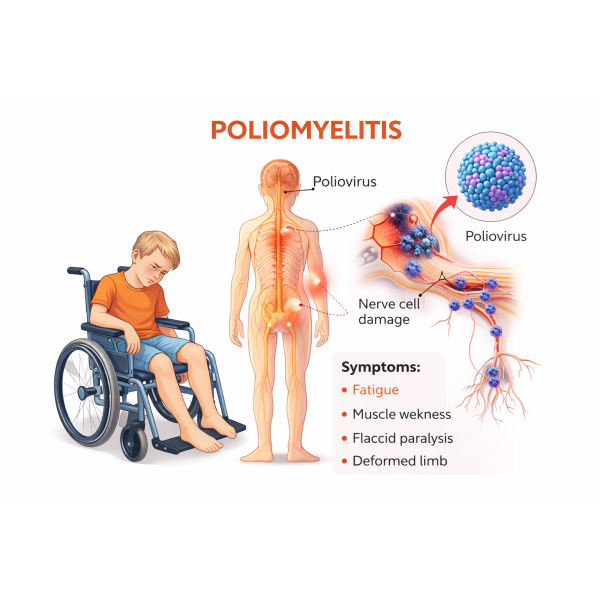
Poliomyelitis is a viral disease caused by the poliovirus, which belongs to the group of enteroviruses. The disease primarily affects the nervous system and in severe cases can lead to damage to motor neurons in the spinal cord.
As a result, the following symptoms may occur:
-
muscle weakness
-
paralysis
-
impaired motor function
-
muscle atrophy
In some patients, the consequences of the disease may appear long after the initial infection and lead to chronic neuromuscular disorders.
Post-Polio Syndrome
Years after the initial infection, some patients may develop the so-called post-polio syndrome.
It may include:
-
progressive muscle weakness
-
chronic fatigue
-
muscle and joint pain
-
reduced physical endurance
These symptoms are believed to be associated with the gradual exhaustion of the compensatory mechanisms of the nervous system and decreased functional activity of motor neurons.
The Importance of Immune Balance and Hydration
The functioning of the immune system is closely related to the metabolic balance of the body, including hydration, microcirculation and cellular metabolism.
Water is a fundamental component of the internal environment of the body and participates in numerous physiological processes, including:
-
transport of nutrients
-
elimination of metabolic waste products
-
maintenance of cellular metabolism
-
regulation of immune responses
Chronic dehydration may negatively affect:
-
cellular metabolism
-
microcirculation
-
the function of immune cells
Electrolytes such as:
-
sodium
-
potassium
-
magnesium
-
calcium
play an important role in maintaining osmotic balance and the normal function of cells.
Maintaining proper hydration and electrolyte balance supports the normal functioning of the immune system and cellular metabolism.
What is Ozone Therapy
Ozone therapy is a medical method that uses a mixture of oxygen and ozone (O₂–O₃) in controlled concentrations.
Ozone is an active form of oxygen that can trigger various biological reactions in the body.
In integrative medicine, ozone therapy is used in order to:
-
improve tissue oxygenation
-
stimulate microcirculation
-
activate the antioxidant system
-
modulate the immune response
Mitochondrial Function and Cellular Energy
Nerve cells and muscle fibers are tissues with extremely high energy demands. Their function depends on the normal activity of mitochondria, which produce cellular energy in the form of ATP (adenosine triphosphate).
In neuromuscular disorders the following may occur:
-
reduced mitochondrial activity
-
increased oxidative stress
-
impaired cellular metabolism
-
reduced energy production
These processes may lead to:
-
chronic fatigue
-
muscle weakness
-
reduced regenerative capacity of tissues.
Potential Influence of Ozone on Cellular Processes
Ozone therapy may activate the adaptive protective mechanisms of the body.
At controlled medical concentrations, ozone produces a mild oxidative stimulus that activates cellular defense systems.
This mechanism may lead to:
-
activation of antioxidant enzymes
-
improvement of cellular metabolism
-
stimulation of mitochondrial function
-
improvement of oxygen transport in tissues.
Improvement of Tissue Oxygenation
Ozone can increase the release of oxygen from hemoglobin and improve oxygen delivery to tissues.
This supports:
-
the metabolism of nerve cells
-
the function of muscle fibers
-
the cellular energy balance.
Improvement of Microcirculation
Ozone therapy may improve the rheological properties of blood, leading to:
-
improved capillary blood flow
-
better oxygen supply to tissues
-
more efficient elimination of metabolic waste products.
Improved microcirculation supports the metabolic balance of neuromuscular tissues.
Activation of Antioxidant Defense
Ozone may stimulate the activity of antioxidant enzymes such as:
-
superoxide dismutase
-
catalase
-
glutathione peroxidase
These enzymes play an important role in protecting cells against oxidative stress, which is often observed in chronic neurological and degenerative conditions.
Methods of Application
Various methods of ozone therapy may be used in clinical practice.
Major Autohemotherapy
A method in which the patient's blood is treated with an oxygen-ozone mixture and then returned to the body.
Rectal Insufflation
A systemic method of ozone administration used in integrative medical practice.
Ozone Capsule
A transdermal method that may support:
-
microcirculation
-
skin oxygenation
-
detoxification processes.
Ozone Therapy as Part of a Rehabilitation Approach
In patients with consequences of poliomyelitis, the therapeutic approach is usually comprehensive and may include:
-
physiotherapy
-
therapeutic exercise
-
rehabilitation programs
-
nutritional support
-
maintaining proper hydration and electrolyte balance.
In this context, ozone therapy may be considered a complementary method, aimed at supporting cellular metabolism, microcirculation and antioxidant defense.
Conclusion
Poliomyelitis may lead to long-term neuromuscular disorders and functional limitations.
Ozone therapy is being explored as an integrative approach that may support:
-
microcirculation
-
antioxidant defense
-
cellular metabolism
-
tissue oxygenation
Due to these mechanisms, it may be used as a complementary therapy in rehabilitation programs for patients with the consequences of poliomyelitis.
Leave a Comment