
Ozone Therapy for Ulcers and Slow-Healing Wounds
Delayed wound healing is a significant medical challenge that can lead to infections, chronic ulcers, and a considerable reduction in quality of life. Such wounds are frequently observed in patients with diabetes, circulatory disorders, venous insufficiency, or weakened immune systems.
In recent years, ozone therapy has gained increasing attention as a complementary treatment that may support the healing process. Due to its antimicrobial, anti-inflammatory, and regenerative properties, ozone therapy is being used in various medical fields, including wound care.
What Are Chronic Wounds and Ulcers
Chronic wounds are wounds that fail to heal within the normal timeframe, usually persisting longer than four to six weeks. They may develop as a result of underlying medical conditions or impaired circulation.
Common types of chronic wounds include:
-
diabetic foot ulcers
-
venous leg ulcers
-
arterial ulcers
-
pressure ulcers (bedsores)
-
traumatic wounds with delayed healing
If left untreated, these wounds can remain open for long periods and may become infected, further complicating the healing process.
How Ozone Therapy Supports Wound Healing
Ozone therapy involves the use of a controlled mixture of medical oxygen and ozone that can be applied locally or systemically.
Several mechanisms may contribute to its therapeutic effects:
Antimicrobial action
Ozone has strong bactericidal, virucidal, and fungicidal properties. It can help reduce microbial contamination in the wound and prevent infection.
Improved microcirculation
Ozone therapy may enhance blood circulation in damaged tissues, increasing the supply of oxygen and nutrients needed for healing.
Stimulation of tissue regeneration
Ozone can stimulate growth factors and cellular activity that support the formation of new tissue.
Reduction of inflammation
Ozone may reduce inflammatory processes and oxidative stress, creating a more favorable environment for wound healing.
Scientific Evidence
A growing number of clinical studies have explored the use of ozone therapy in wound care.
Research suggests that ozone therapy may reduce wound size, accelerate healing, and improve tissue regeneration, especially when used as an adjunct to standard treatments.
In particular, studies on diabetic foot ulcers have shown that ozone therapy may help decrease inflammation, improve circulation, and stimulate tissue repair.
Although more large-scale clinical trials are needed, the current evidence suggests promising therapeutic potential.
Methods of Ozone Therapy for Wounds
Ozone therapy can be administered through several techniques depending on the condition of the patient and the type of wound.
Local Ozone Therapy (Ozone Bagging)
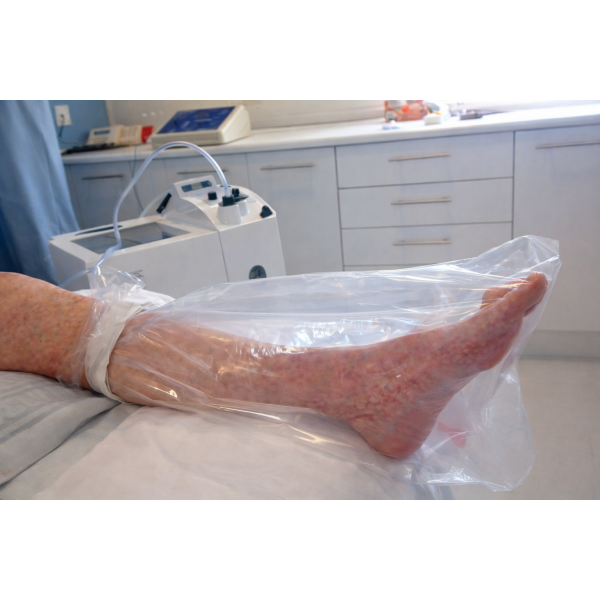
One of the most widely used methods for treating chronic wounds is local ozone therapy, often referred to as ozone bagging.
In this procedure, the affected limb or wound area is placed inside a special sealed bag. A controlled mixture of oxygen and ozone is then introduced into the bag, allowing the gas to act directly on the wound and surrounding tissues.
This technique may help:
-
eliminate bacteria, viruses, and fungi
-
improve local blood circulation
-
increase oxygen delivery to tissues
-
stimulate tissue regeneration
Local ozone therapy is commonly used in the treatment of diabetic ulcers and chronic wounds.
Ozone Sauna
Another therapeutic approach is the ozone sauna, in which the body is exposed to ozone in a specialized chamber.
In many systems, ozone is combined with heat and steam, which stimulates sweating and enhances circulation.
However, professional medical ozone saunas can also operate without heat, allowing the body to be exposed only to ozone gas. This option is particularly useful for patients with sensitive skin, inflammatory conditions, or wounds where heat exposure is not recommended.
In such cases, ozone may help:
-
reduce microbial contamination
-
stimulate blood circulation
-
support tissue regeneration
Ozonated Oils and Ozonated Water
Ozonated vegetable oils, such as ozonated olive oil, are widely used in dermatology and wound treatment.
These oils contain stable ozone-derived compounds called ozonides, which gradually release active oxygen when applied to the skin.
Possible benefits include:
-
antimicrobial activity
-
stimulation of granulation tissue formation
-
faster wound healing
Ozonated water is often used to clean and disinfect wounds before applying other therapeutic treatments.
Molecular Microencapsulated Ozone
Recent advances in biotechnology have led to the development of innovative stabilized ozone formulations.
One such approach is molecular microencapsulation of ozonized lipids, where ozone-derived compounds are encapsulated within microscopic carriers.
This technology allows:
-
improved stability of ozone compounds
-
controlled and gradual release of active substances
-
improved absorption and bioavailability
Microencapsulated ozonized lipids may support the body’s antioxidant defense systems, immune response, and tissue regeneration, making them a promising complementary approach in wound healing.
Potential Benefits of Ozone Therapy
For patients with chronic wounds and ulcers, ozone therapy may provide several potential benefits:
-
accelerated wound healing
-
reduction of infection risk
-
improved blood circulation
-
stimulation of new tissue formation
-
reduction of pain and inflammation
Some studies also suggest that ozone therapy
Leave a Comment