
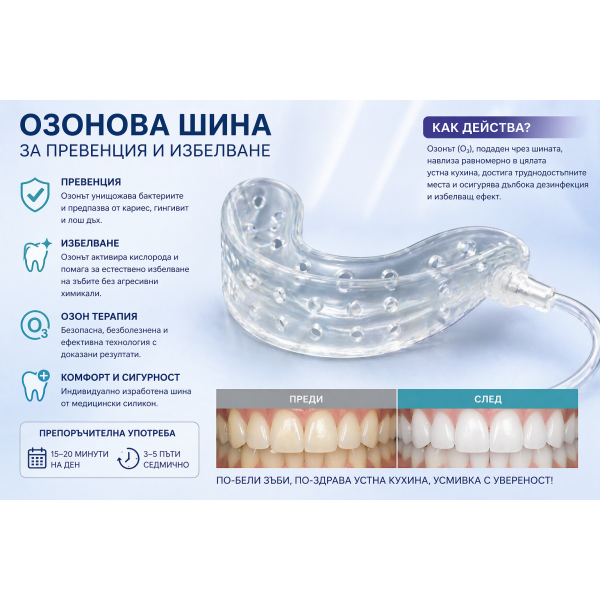
Modern dentistry is increasingly focused on prevention as the primary tool for maintaining long-term oral health. Instead of treating already developed conditions, the focus is shifting toward early intervention, control of the bacterial environment, and maintaining balance within the oral cavity.
In this context, ozone therapy has emerged as an innovative method that enhances traditional professional dental hygiene. Thanks to its strong antimicrobial properties and its ability to act on biofilm, ozone provides a new level of protection against the development of caries, gingivitis, and periodontal diseases.
The Role of Bacteria in Oral Health
The oral cavity is one of the most densely populated microbial environments in the human body. When the balance between beneficial and pathogenic bacteria is disrupted, conditions are created for the development of:
- dental caries
- gum inflammation
- bad breath
- plaque and tartar accumulation
Controlling this microbiome is the foundation of effective prevention.
How Ozone Works in Oral Hygiene
Ozone acts directly on bacterial flora through an oxidative mechanism that destroys microorganisms without creating resistance. Unlike conventional antiseptics, it:
- acts rapidly
- reaches difficult-to-access areas
- leaves no toxic residues
In addition, it supports tissue oxygenation and improves overall gum health.
Application in Daily Dental Practice
Within professional dental hygiene procedures, ozone can be used as a final step after cleaning, providing deep disinfection of the oral cavity. It is particularly suitable for patients with increased risk of inflammation, sensitive gums, or a tendency to accumulate plaque.
Ozone therapy is also effective as a maintenance procedure between dental visits, contributing to longer-lasting results and improved control of the bacterial environment.
Advantages of Ozone Therapy in Prevention
The use of ozone in preventive care leads to a significant reduction in bacterial load and an overall improvement in oral health. This results in healthier gums, reduced inflammation, and a lower risk of developing dental diseases.
The method is gentle, painless, and suitable for a wide range of patients, including those with sensitivity or chronic conditions.
Benefits for the Patient
Patients often notice a difference after the first procedures. Gum bleeding decreases, oral freshness improves, and the effect of professional cleaning lasts longer. Ozone therapy creates a level of cleanliness and comfort that is difficult to achieve with conventional methods.
Clinical Significance
Regular use of ozone as part of preventive care leads to better control of the oral microbiome and reduces the need for invasive treatments in the future. This makes it a valuable tool for both patients and dental professionals.
Conclusion
Ozone therapy in oral prevention represents a new standard in modern dentistry, combining effectiveness, safety, and patient comfort. It does not replace traditional hygiene but enhances it by providing deeper protection and better long-term results.
Contact us to offer your patients a new level of preventive care with ozone therapy.
1 Comments
Тези процедури си ги правя в Испания на мен и децата профилактично. Препоръчвам.
Leave a Comment