
Dental surgery and implantology are among the most precise and responsible fields in modern dentistry, where the final outcome depends not only on the technical execution but also on the body’s ability to achieve rapid and high-quality tissue healing. Procedures such as tooth extractions, implant placement, bone regeneration, and sinus lift create conditions in which tissues are temporarily vulnerable and exposed to an increased risk of microbial contamination and inflammatory processes.
In this context, ozone therapy has established itself as a modern adjunctive method that supports both infection control and tissue regeneration. Due to its antimicrobial, anti-inflammatory, and biostimulatory properties, ozone creates an optimal environment for healing and improves the predictability of surgical outcomes.
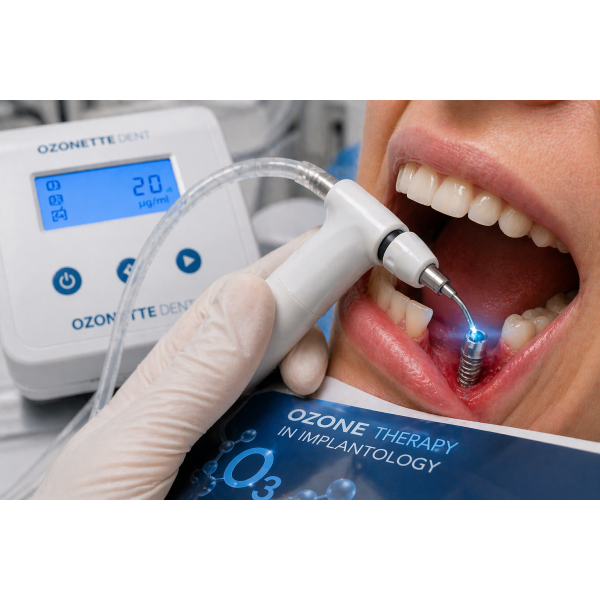
The use of specialized systems such as OZONETTE DENT allows precise and controlled application of ozone directly into the surgical area, significantly enhancing therapeutic effectiveness.
Biological Processes in Healing
Healing after a surgical intervention is a complex biological process that proceeds through several main phases. In the initial stage, the body activates an inflammatory response aimed at eliminating microorganisms and clearing damaged tissues. This is followed by a proliferative phase, during which new connective tissue forms and blood supply is restored. In the final stage, remodeling occurs, where tissues regain their structure and functionality.
Any factor that reduces microbial load and improves oxygenation has a direct impact on the speed and quality of healing. This is where ozone plays a crucial role, supporting all phases of this process.
Mechanism of Action of Ozone
Ozone (O₃) is a highly reactive form of oxygen that acts simultaneously on microorganisms and tissues. Its effect is expressed through oxidation of the cell membranes of bacteria, viruses, and fungi, leading to their rapid destruction. In addition, ozone breaks down the organic structures within microbial biofilms, facilitating their elimination and reducing the risk of persistent infection.
At the same time, ozone exerts a strong anti-inflammatory effect by reducing the release of inflammatory mediators, which leads to a decrease in local swelling, pain, and discomfort after the procedure. It also stimulates cellular metabolism and improves microcirculation, resulting in better oxygen supply to tissues and accelerated regeneration.
Clinical Applications in Surgery and Implantology
In dental surgery, ozone therapy is widely applied across various procedures, supporting both intraoperative infection control and postoperative recovery. During tooth extractions, ozone can be used to disinfect the socket, thereby reducing the risk of complications such as dry socket and accelerating the healing process.
In implantology, ozone plays a key role in preparing the implant site by reducing the bacterial load and creating favorable conditions for osseointegration. Improved blood circulation and oxygenation support the stable integration between the implant and bone, which is critical for long-term success.
In bone regeneration procedures and sinus lift surgeries, ozone enhances the integration of grafting materials and reduces the risk of infection in the surgical area. In cases of peri-implantitis, ozone therapy is used to control bacterial colonization around the implant and support stabilization of the condition.
Methods of Application
Ozone can be applied in various ways depending on the clinical situation, with direct local application being the most effective approach. The gaseous form allows deep penetration and access to areas that are difficult to reach with conventional agents. Ozonated oils are also used, particularly in postoperative care, providing prolonged antimicrobial action and supporting home maintenance.
Controlled application through devices such as OZONETTE DENT ensures precise dosing, safety, and maximum effectiveness.
Advantages of Ozone Therapy
The use of ozone in surgical practice leads to a significant reduction in microbial load and acceleration of healing processes. This results in a lower risk of complications, improved implant stability, and higher patient satisfaction. For the dental practice, the implementation of ozone therapy offers an opportunity to provide a more advanced and effective treatment, distinguishing the clinic in a competitive market.
Benefits for the Patient
From the patient’s perspective, ozone therapy is associated with reduced pain and discomfort after the procedure, faster recovery, and a lower risk of infection. The reduced need for medications, including antibiotics, further enhances the safety and comfort of treatment.
Clinical Outcomes
Clinical observations show that ozone application leads to faster epithelialization, reduced inflammation, and improved tissue healing. In implantology cases, higher implant stability and better integration are observed, which are critical factors for long-term success.
Safety and Control
To achieve maximum effectiveness and safety, ozone must be used in controlled concentrations and applied with certified devices. Precise dosage control and proper application are essential to avoid adverse effects and ensure optimal outcomes.
Role in Modern Practice
Ozone therapy does not replace traditional surgical methods but complements them by enhancing their effectiveness and predictability. It becomes a valuable tool for clinics aiming to implement innovative technologies and improve the quality of their services.
Conclusion
Ozone therapy in dental surgery and implantology represents an effective and scientifically supported approach to infection control and optimization of healing processes. Thanks to its multifactorial action, it contributes to better clinical outcomes, higher safety, and improved patient experience.
Contact us to learn how to implement ozone therapy in your practice and improve the success of surgical and implantological procedures.
- It is offered with training on how to operate the device and training on its application in dentistry.
- For daily hygiene use ACTIVOZONE DENTAL FRESH
Leave a Comment